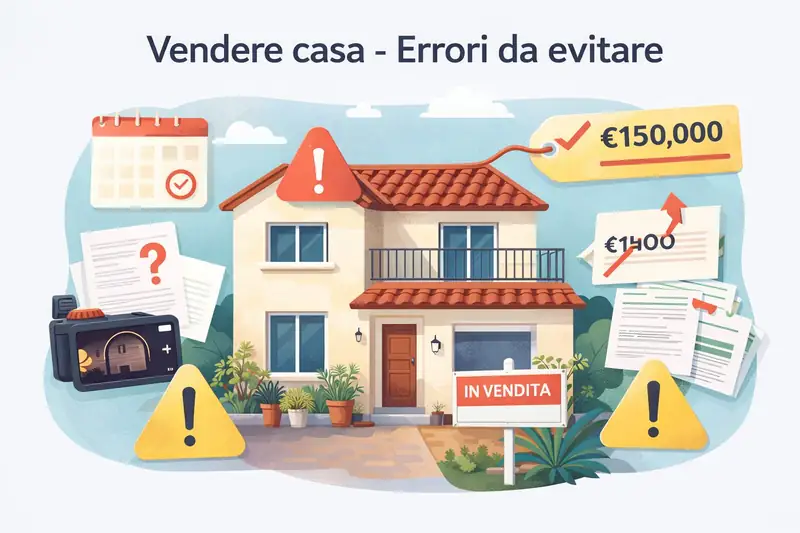
Selling a property may seem simple. In reality, many owners make mistakes that slow down the sale or reduce the home's perceived value. That is why understanding which mistakes to avoid is the first step towards approaching the market with greater clarity. Selling a home while avoiding poor decisions means increasing your chances of receiving enquiries from more suitable buyers and managing negotiations more effectively.
Selling a home – Mistakes to avoid from the outset
One of the most common mistakes is starting without a strategy. Properties are often listed in a hurry, without clearly defining the price, target audience and market positioning. As a result, the listing makes a weak entry into the market and generates unhelpful responses.
Another mistake is underestimating first impressions. Poorly prepared photos, vague descriptions and incomplete information reduce interest. By contrast, a clear, well-organised presentation helps showcase the property from the very first contact.
The wrong price: one of the most common mistakes
Among the mistakes to avoid, setting a price out of line with the market is one of the most damaging. A price that is too high puts off many potential buyers. It can also leave the property listed online for too long. When that happens, the home risks losing its appeal.
A price that is too low can also be a problem. It may suggest hidden issues or lead to an unnecessarily low sale price. That is why it is important to start with a realistic valuation that reflects the area, the property's condition and current demand.
Selling a home requires balance. A well-judged asking price does not guarantee an immediate sale, but it improves the quality of enquiries and makes negotiations more credible.
Neglecting the property's presentation
Many owners think that simply listing their home as it is will be enough. However, the market rewards properties that are well presented. Untidy rooms, dark photos or features that are not properly highlighted can hold back interest even when the home has good potential.
Avoiding mistakes when selling a home also means paying attention to how the property is perceived. In particular, tidiness, light, cleanliness and clear visual communication help potential buyers imagine themselves in the property. This matters online and even more during viewings.
The listing text also matters a great deal. If it is too generic, it does not help the property stand out. If, instead, it highlights the property's actual strengths, it improves the quality of enquiries.
Managing viewings and enquiries poorly
Another common mistake is organising viewings poorly. Some owners accept appointments without screening prospective buyers. Others respond late or unclearly. In both cases, the risk is missing out on real opportunities.
Managing enquiries well means identifying suitable prospective buyers more effectively and guiding them with useful information. It also means showing the home at the right time and in the right way. An unprepared or disorganised viewing can undermine even a good property.
Selling a home also requires attention to communication. Prompt responses, consistent information and well-managed availability convey greater reliability.
Underestimating paperwork and technical matters
Poor preparation of paperwork is another mistake to avoid. Some owners only think about these matters at a late stage. However, missing documents or delayed checks can slow down negotiations and create unnecessary tension.
Preparing the essentials in advance makes the process more orderly. It also helps give potential buyers greater confidence. When the sale progresses with clarity, communication between the parties becomes easier too.
Approaching negotiations without a method
Negotiations should not be improvised. Sometimes an owner rejects an offer too quickly. At other times, they accept unfavourable terms for fear of losing the opportunity. In both cases, the discussion lacks a balanced approach.
Avoiding mistakes when selling a home also means knowing how to assess offers, timing and the actual room for negotiation. This requires clear thinking. It also requires a practical understanding of the market. Well-managed negotiations offer better protection for the property's value and help you make more informed decisions.
Achieving a better sale means avoiding the most common mistakes
Selling a property is about more than just publishing a listing. It is a process that requires preparation, consistency and attention to detail. That is why avoiding the most common mistakes can make a real difference to the time it takes, the quality of enquiries and the strength of negotiations.
Mistakes to avoid when selling a home are a key consideration for every owner who wants to take a more effective approach. With the right approach, you can better showcase the property, communicate more credibly and handle the sale with greater confidence.